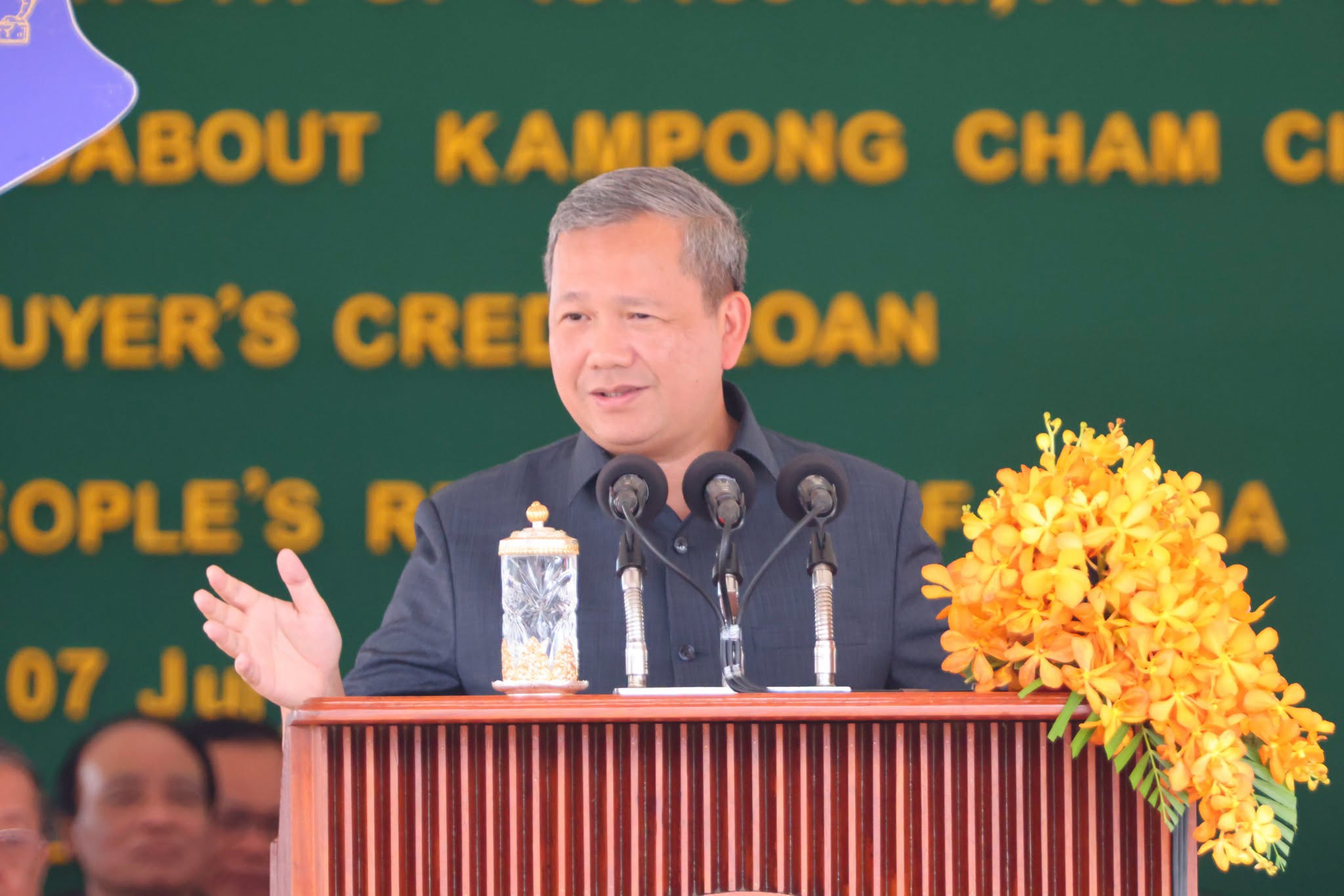
Prime Minister Samdech Hun Manet has issued a strong directive to immediately cease all road construction practices that compromise quality. The Prime Minister’s order specifically targets what he referred to as the ‘thick, thin, thick’ approach, a term used to describe substandard and dishonest construction methods. This crucial announcement was made during the inauguration ceremony of National Road 7, which stretches from the Skun roundabout to Kampong Cham city, on the morning of July 7.
Emphasizing the long-term sustainability of the nation’s infrastructure, Prime Minister Hun Manet stressed the importance of collective responsibility in maintaining road quality. He explained that by ensuring roads are built to a high standard, the government can reallocate budgets traditionally reserved for frequent repairs towards the development of new roads and bridges, as well as maintaining existing infrastructure in other areas. The Prime Minister underscored this point with an oral order to eliminate what he termed the ‘culture of injecting, injecting, injecting’ – a colloquial reference to inadequate or fraudulent construction practices.
Prime Minister Hun Manet explicitly stated, “Please stop the injection. Inject a thin cigar!” This firm statement underscored his demand for all road projects to adhere strictly to high-quality standards. The primary objective, he reiterated, is to significantly reduce future repair costs and ensure public funds are utilized efficiently.
During the same inauguration event, the Prime Minister also instructed the Ministry of Public Works and Transport to collaborate closely with the Ministry of Rural Development. Their joint task is to establish and enforce clear standards for the transportation of goods on national roads, a measure crucial for preserving the longevity and structural integrity of the infrastructure. Samdech Hun Manet specified that these new standards must be developed cooperatively, avoiding duplication and ensuring they are practical and easily applicable for both transporters and farmers. Crucially, these standards must be designed to guarantee the quality of the roads and prevent any premature damage.