Cambodia’s automotive sector has significantly expanded, now boasting a total of 15 car assembly plants. Of these, ten companies are currently operational, two plants are yet to commence operations, and three more are actively under construction. This rapid development has led the Cambodian government to evaluate its policy on issuing new licenses for car assembly operations, with discussions underway regarding a potential temporary suspension. Currently, the nation’s car assembly capacity stands at an estimated 35,000 units annually.
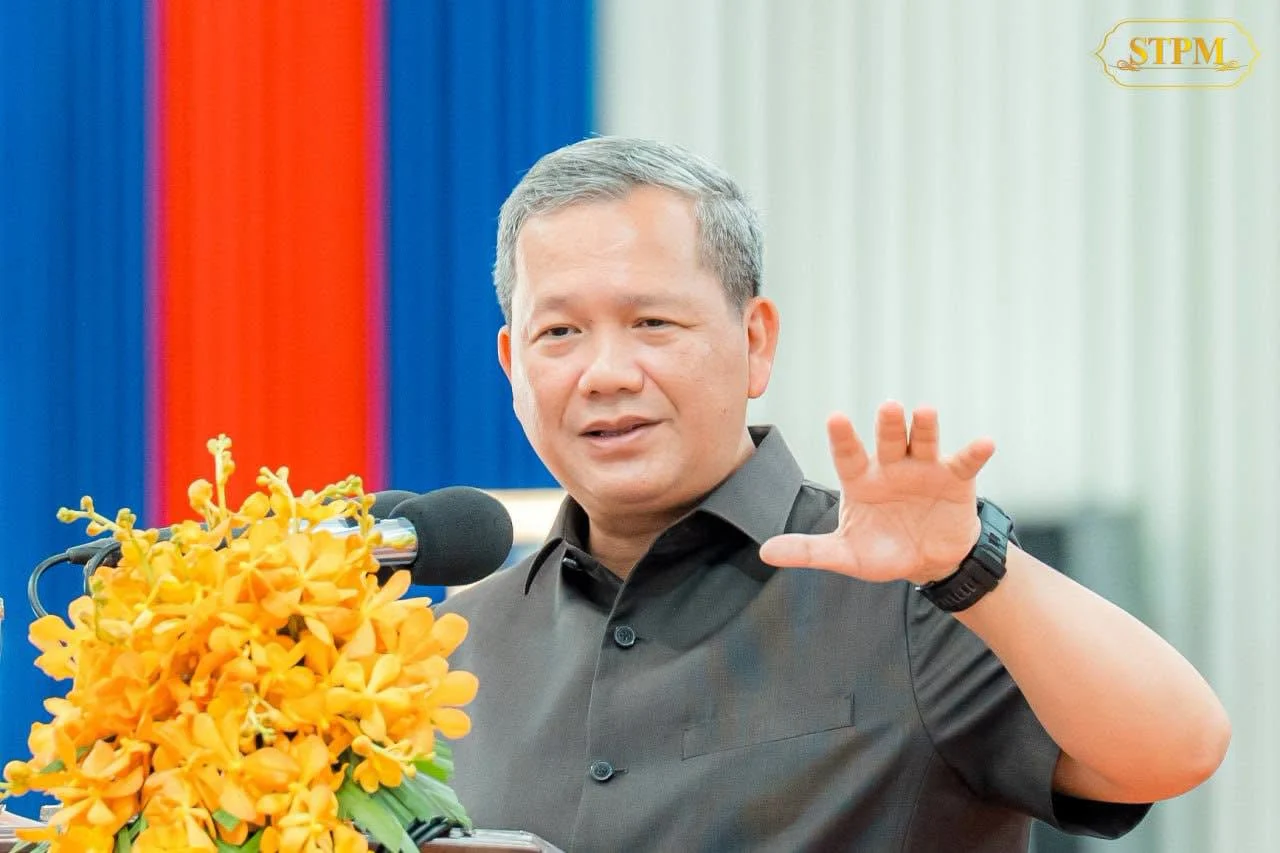
During the official inauguration ceremony of the GAC car assembly and manufacturing plant in Kampong Chhnang province on September 17, Prime Minister Hun Manet highlighted the substantial growth in the industry. He stated that these 15 car assembly plants represent a combined investment of $248 million. Notably, 28% of this capital originates from domestic investors, while a significant 72% comes from foreign direct investment. These companies collectively contribute to the national economy by providing 2,774 skilled employment opportunities.
Addressing the sector’s expansion, Prime Minister Hun Manet instructed Mr. Sun Chanthol, First Vice-President of the Council for the Development of Cambodia (CDC), and Mr. Chea Vuthy, Secretary-General of the CDC’s Investment Committee, to conduct a thorough assessment. Their task is to evaluate the actual market demand and the scale of investment within the automotive industry. The Prime Minister posed a critical question for consideration: whether Cambodia should continue granting new licenses for investments in this industrial sector at present or perhaps defer such decisions for the next three years.
He emphasized, “Currently, we have granted licenses to 15 car assembly and manufacturing companies. Therefore, I ask you to consider how many companies we should have at this stage, based on the domestic demand for vehicles. Most of these car assembly companies primarily cater to local market needs.” This statement, drawing on a report from the Ministry of Industry, Science, Technology, and Innovation, underscores the nation’s capacity to produce 35,000 vehicles per year. The Prime Minister’s inquiry challenges policymakers to determine if this output aligns with the market’s demand for new cars, especially given the ongoing import of vehicles from abroad.
Prime Minister Hun Manet further suggested that the issuance of licenses for new car assembly companies might be put on a temporary hold after reaching the current count of 15. He articulated a clear rationale for this approach, stating, “Should we accelerate further, or should we pause here for now? The key is not to focus on the number of companies we grant licenses to, or the number of companies that open. Quantity alone does not indicate the resilience of this sector. Resilience is only evident when we speak about the ability of each company to survive and grow.” He illustrated this point by explaining that if 100 companies open but 80 close within three years, the sector would be considered unsustainable. Conversely, if 100 companies continue to thrive and expand, it signifies a robust and sustainable industry.
The Prime Minister urged the CDC to exercise meticulous consideration when evaluating applications for additional car assembly and manufacturing licenses. Crucially, he also tasked the CDC with ensuring that the existing 15 companies are well-supported to survive and prosper. This includes safeguarding their market share and enabling them to compete effectively against new cars imported from international markets.
“Our market encompasses both domestically produced cars and imported vehicles. What is important is to consider when we should expand the number of companies? Is the current situation, with 15 companies, sufficient for Cambodia? Should we pause for now? Or wait until the demand for cars reaches 50,000, 60,000, or even 70,000 units per year before we consider further expansion?” the Prime Minister reiterated, stressing the need for strategic planning.
He concluded by reaffirming the government’s unwavering principle to foster the growth and success of investors. Prime Minister Hun Manet expressed particular satisfaction at the prospect of inaugurating a second or fifth factory for any local company, emphasizing that facilitating such growth remains a paramount responsibility for the Cambodian government.