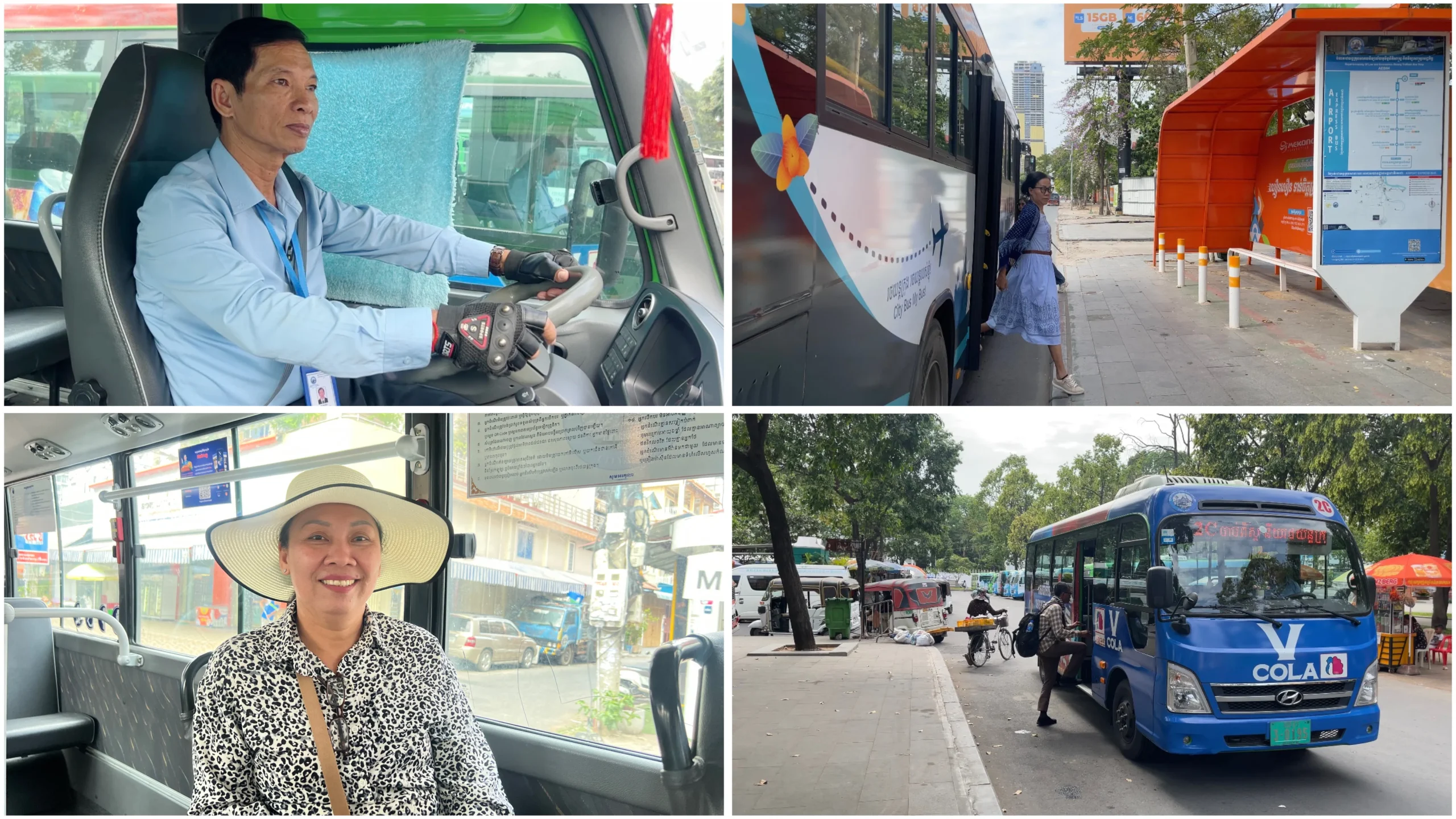
Phnom Penh’s commuters are grappling with the persistent challenge of rising gasoline prices, which significantly increases the daily cost of transportation for many residents, particularly those relying on motorcycles and private cars. Public transportation, specifically the city’s bus service, offers a notably more affordable alternative, with a standard fare of just 1,500 Riel per ride. This low cost positions it as a practical solution for daily commuting and managing household expenses.
However, despite the clear financial advantage of public buses amidst escalating fuel costs, an unexpected trend has emerged: the number of bus passengers has not seen a substantial increase. This presents a curious paradox in the city’s daily commute, where an affordable option appears to be underutilized even when personal transport costs are on the rise.
Kong Bunthoeun, an experienced public bus driver in Phnom Penh, confirmed this observation. He noted that while fuel prices have indeed climbed, the daily passenger count on his routes has remained largely consistent, without the anticipated surge. He highlighted that the majority of his passengers are regular commuters, often individuals who consistently utilize the bus service. These loyal riders typically include seniors, students, and business professionals. For them, choosing the public bus is a deliberate decision driven by the desire to reduce daily expenses, enjoy the convenience of not having to navigate traffic, and experience a relatively comfortable journey.
Ms. Sokny, a 45-year-old resident from the Chak Angre Leu area, exemplifies these regular commuters. She consistently opts for the public bus for her daily travels, citing significant cost savings compared to other transport methods. “I think it reduces our costs because everything else is going up in price,” she explained. She pointed out that a single trip by tricycle could cost between 8,000 and 10,000 Riel, making the 1,500 Riel bus fare considerably more economical. Even her children, who previously relied on motorcycles, have transitioned to cycling to mitigate rising fuel expenses. While acknowledging that bus journeys might take slightly longer than a tricycle ride, Ms. Sokny views it as a valuable and practical choice. She also expressed a common sentiment among commuters, advocating for the expansion of bus lines to further enhance convenience and accessibility across the city.
Phnom Penh’s public bus services operate daily from 5:30 AM to 8:00 PM, providing extensive coverage throughout the day. Furthermore, the service extends free travel to several key demographics, including elderly citizens, teachers, individuals with disabilities, athletes, workers, employees, students, and children under one meter tall, making it an even more inclusive and accessible option for a significant portion of the population.