
The government of Japan has officially committed approximately $1 million USD to enhance employment opportunities and improve livelihoods for Cambodian workers returning from Thailand. This initiative specifically targets those who have been affected by the border disputes between the two nations, providing crucial support for their reintegration into Cambodia’s domestic economy.
According to an official statement from the Japanese Embassy in Cambodia, this comprehensive assistance package, which includes job support, vocational training, and specialized services for Cambodian workers, will be jointly implemented by the International Labour Organization (ILO) over a two-year period.
The formal signing of the Exchange of Notes for this grant aid took place at the Japanese Embassy on February 18. His Excellency Ueno Atsushi, Ambassador of Japan to Cambodia, and Ms. Qian Xiaoyan, Director of the ILO Country Office for Thailand, Cambodia, and Lao People’s Democratic Republic, formalized the agreement, which provides JPY 156 million (equivalent to approximately $1 million USD). The project is specifically designed to promote employment for returning migrant workers impacted by the Cambodia-Thailand border situation. The signing ceremony was also graced by the presence of His Excellency Heng Sour, Cambodia’s Minister of Labour and Vocational Training.
Ambassador Ueno Atsushi emphasized that the project will deliver vital vocational training and facilitate job matching for Cambodian migrant workers returning from Thailand. He conveyed his strong belief that “This project is expected to help restore stable livelihoods for migrant workers and significantly improve the well-being of their families.”
Named the “Employment Promotion Project for Returning Migrant Workers Affected by Border Disputes,” this 24-month endeavor will be led by the ILO in close collaboration with the Cambodian Ministry of Labour and Vocational Training. Its core objective is to assist returning migrant workers in securing decent employment and seamlessly integrating into the local economy. This will be achieved through a comprehensive combination of job support and skill-building services.
As part of the project, the ILO and the Ministry of Labour are set to establish new Migrant Worker Resource Centers in provinces experiencing a high influx of returning workers, namely Oddar Meanchey, Pursat, and Preah Vihear. These centers will serve as crucial hubs, offering a range of services including consultation, outreach programs, data collection, and legal assistance to the workers.
The Ministry of Labour further elaborated that the project will bolster employment responses by facilitating consultations with employers and workers’ professional organizations. It will also organize job fairs at the commune and sangkat levels and conduct targeted awareness campaigns, particularly within labor-intensive sectors such as garment manufacturing, construction, and general production.
Significant emphasis will also be placed on skill development, involving both the strengthening of existing competencies and the acquisition of new skills aligned with market demands. This includes short-term training courses, Recognition of Prior Learning (RPL) programs, employability training, and entrepreneurship development. The project also aims to reinforce national systems to ensure the sustainable reintegration of these workers into decent work.
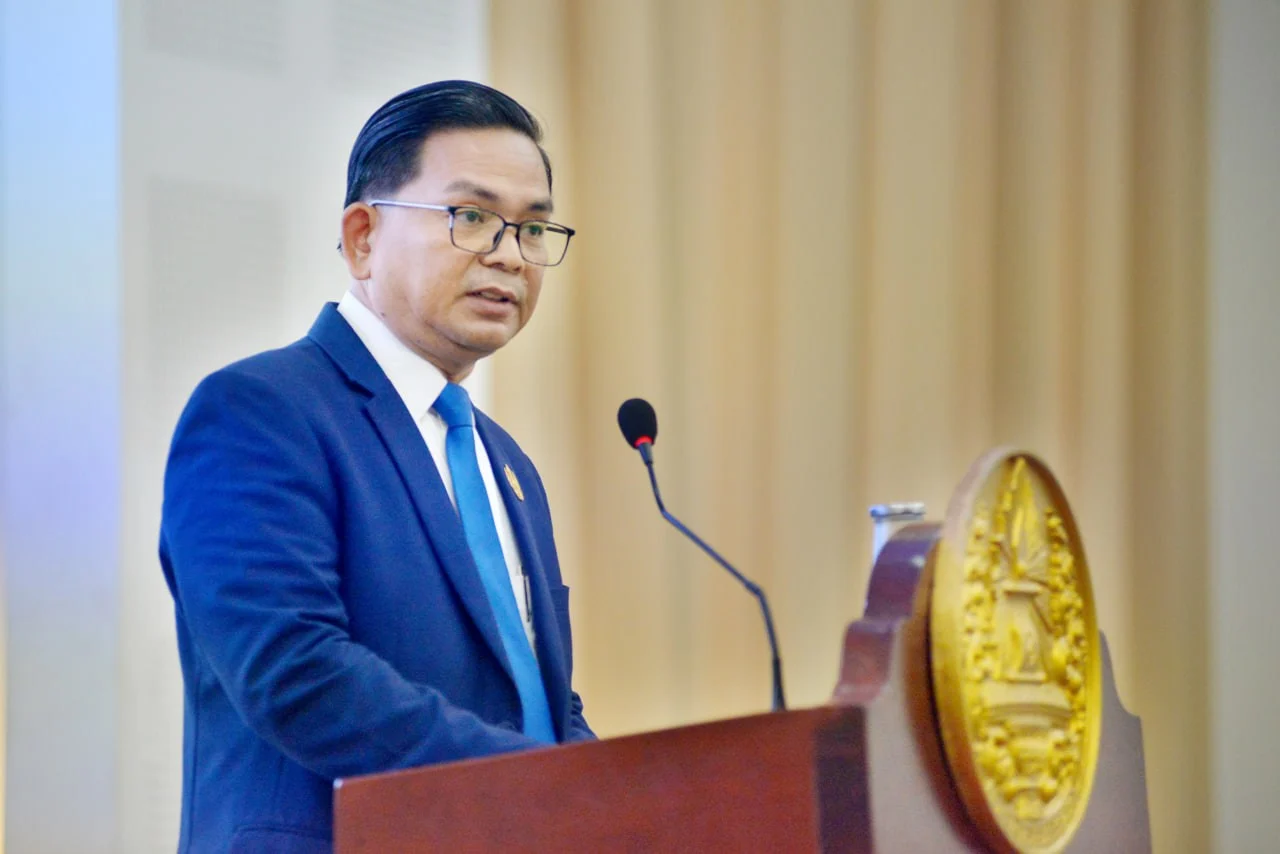
Minister Heng Sour reiterated his support, stating that the project will contribute significantly to the long-term development of the labor market. It will enhance Cambodia’s capacity to connect former workers with skill development initiatives, employment services, and productive livelihoods, ultimately helping them rebuild their lives with dignity. The Minister affirmed, “This project will not only help former Cambodian workers returning from Thailand reintegrate but also empower them to build stable, productive, and dignified futures in their homeland.”
Mr. Moeun Tola, Head of the Centre for Alliance of Labour and Human Rights (CENTRAL), welcomed Japan’s generous assistance. He noted that currently, only about 30 percent of Cambodian workers returning from Thailand manage to secure decent employment. Given the evolving situation of the Cambodia-Thailand border dispute, Mr. Tola recommended that the project prioritize integrating returning workers into the agricultural sector over solely industrial sectors, as many previously worked in agriculture and construction in Thailand.
By the end of 2025, over 950,000 citizens and former workers had returned to Cambodia following the Cambodia-Thailand border disputes. According to data from the Ministry of Labour, approximately 620,000 of these returning workers have since successfully found employment.