
The Trapaing Sangkae fishing and tourism community in Kampot province is emerging as a significant ecotourism destination, demonstrating a strong commitment to promoting the use of the Cambodian Riel (KHR). Located approximately seven kilometers from Kampot’s provincial town, in Kampong Kaes village, Trapaing Sangkae commune, Teuk Chhou district, this vibrant community is characterized by nearly 50 hectares of lush mangrove forests that stretch along the Kbal Romeas stream to the sea.
Today, Trapaing Sangkae is a popular retreat for both local and international visitors seeking respite from daily stresses. The community welcomes at least 1,000 tourists weekly, a figure that significantly contributes to enhancing the livelihoods of its residents and overall community development. A particularly notable aspect of this thriving ecotourism hub is the widespread adoption of the national currency by visitors engaging in various services, including accommodation, dining, and recreational activities.
Local authorities and community leaders actively encourage the use of the Riel among all tourists. Ms. Mann Yuwai, a media relations staff member at the Trapaing Sangkae fishing community, highlights that over 80 percent of transactions within the community are conducted in Riel. Community members express great satisfaction in accepting Riel from both domestic and international visitors for tourism services.
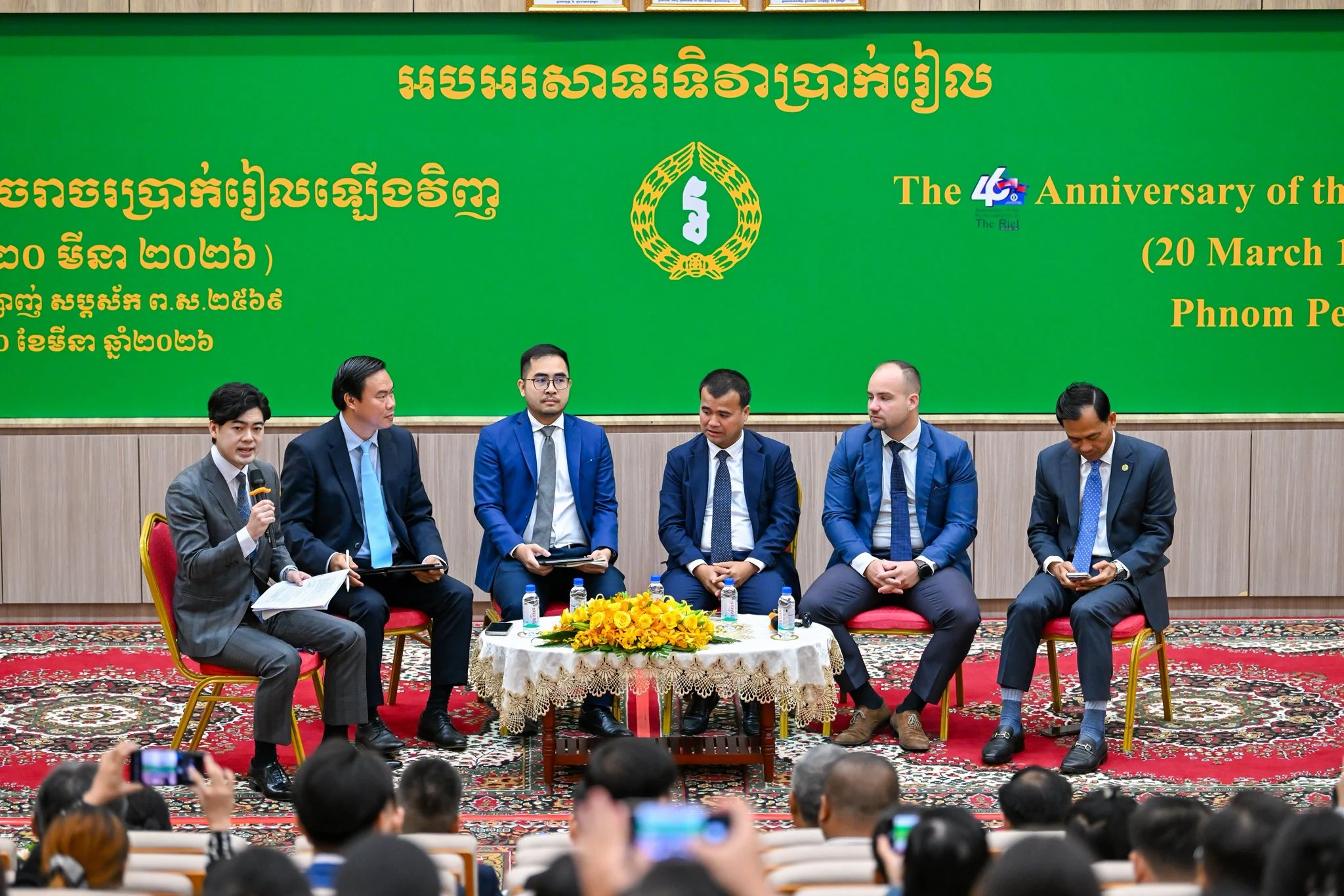
Ms. Yuwai explains the practical benefits: “When we receive payments in Riel, we can immediately distribute funds to the cooking team, boat operators, and mangrove guides. If tourists pay in US dollars, we have to spend time exchanging the money and searching for Riel, which can be cumbersome. Receiving Riel allows us to allocate funds quickly to each department without the need for currency exchange, unlike with dollars.” This sentiment is echoed by community chief Mr. Sim Him, who elaborated on the advantages during the ‘Understanding the Riel’ program.
Mr. Him stated that all services within the community are provided by its members, and daily payments require Riel. He emphasized the risks associated with accepting US dollars, such as potential losses from torn or damaged bills, and the increased risk of encountering counterfeit currency due to unfamiliarity with dollar security features. “Therefore, it is essential for us to prioritize the Riel; it offers greater security,” Mr. Him affirmed.
Beyond the practical advantages, the Trapaing Sangkae ecotourism community also appeals to all citizens to embrace and elevate the national currency, seeing it as crucial for the growth of both the local and national economies. Ms. Yuwai passionately urged, “As Cambodians, we should value what is ours. For me, the Riel is deeply meaningful. Its value lies in the pride of people who truly love their nation by supporting Cambodian products. It’s beneficial for all of us to use the Riel. It signifies our identity as Cambodians. If we excessively value foreign currency, it diminishes our own Riel. Our community is very pleased to use the Riel because it is easy to spend, straightforward to count, and free from concerns about counterfeits.”
Tourists also share positive experiences regarding Riel usage. Ms. Kao Ousah, who visited with three friends, confirmed her preference for the national currency. “During my travels here, I predominantly use Riel because vendors quote prices in Riel, so I pay them back in Riel. Our Riel is incredibly easy to use. The price of goods is exactly what you pay – 1,000 Riel is 1,000 Riel; there’s no complex calculation. With dollars, they might round down or add extra fees. And old, worn, or torn dollars are very difficult to spend.”
Both Ms. Ousah and her friends highlighted the convenience of using Riel in their daily lives, not just in tourism. They firmly believe that the widespread use of Riel contributes to national pride. “By supporting the Riel, we collectively enhance its value. If we all embrace Riel widely, foreigners, especially tourists, will increasingly recognize it as Cambodia’s currency. Each Riel banknote features distinct Cambodian identities, including world heritage sites, Khmer script, and images of our monarchs,” they added.
Ms. Moeun Srey Pov, who traveled from Kampong Thom province with nearly ten family members and relatives to experience the Trapaing Sangkae community, also praised the value of using Riel for her services. “I only use Riel! Even when my salary is deposited in dollars, I convert it all to Riel. I don’t keep or use dollars. I support the Riel because, as a Cambodian, I must support our national currency. Using Riel is very convenient. Wherever I go in Cambodia, I can spend Riel because it is our national currency.” Ms. Kao Ousah further implored, “We urge everyone to help uplift our Cambodian Riel. Wherever you travel within the country, try to spend Riel. Even if prices are quoted in dollars, always ask for the Riel equivalent. When we start using Riel ourselves, others will follow, thereby increasing the value of our currency.”