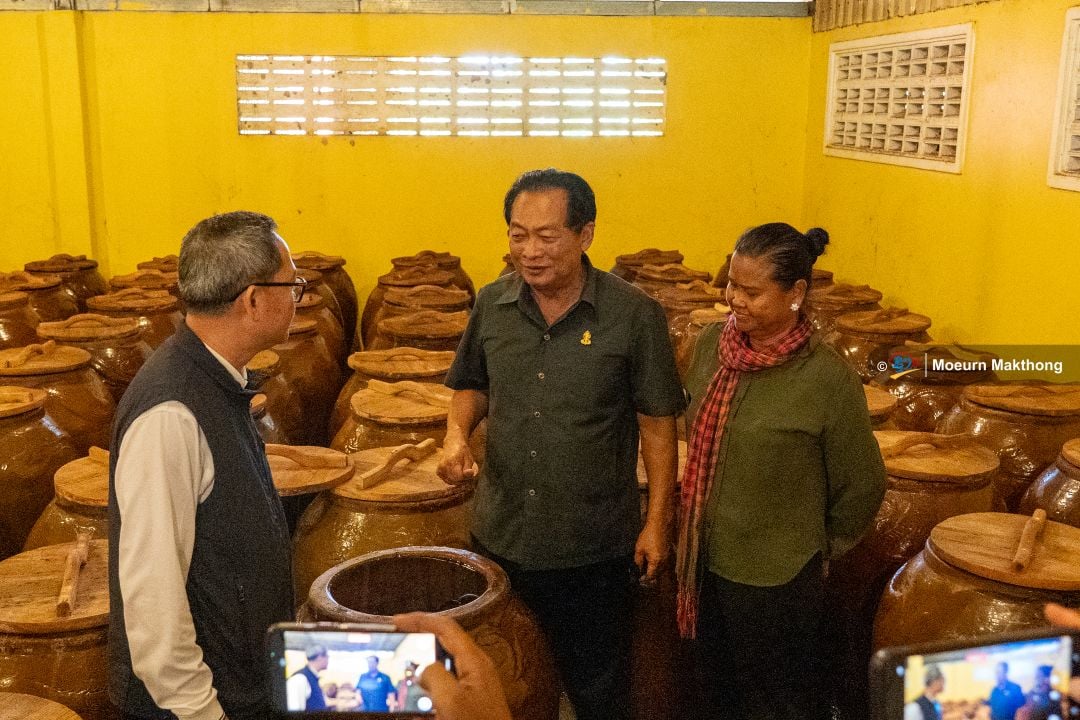
Sihanoukville: Since the year 2000, prominent Cambodian businessman Duke Mong Reththy and his wife have meticulously upheld a cherished family tradition: the production of “prahok,” a staple fermented fish paste, and the preservation of frozen fish stocks. This dedicated practice ensures their warehouse remains consistently full. While Duke Mong Reththy is a millionaire in agriculture, he does not view this prahok production as a large-scale commercial enterprise for personal profit. Instead, its primary purpose is to provide food for his numerous staff members and to safeguard an invaluable ancestral culinary heritage and customs from fading away.
The Duke’s specialized Prahok House is strategically located in Keo Phos District, Preah Sihanouk Province. Annually, his family operation yields an impressive average of approximately 100 tons of prahok. Complementing this, they also store around 100,000 liters of traditional fish sauce. The prahok itself is predominantly crafted from robust catfish and local riel fish, ensuring authentic flavor and quality.
During a visit to understand “Mong Reththy’s agricultural production chain” on February 21, Duke Mong Reththy addressed the media, clarifying his motivations. “This prahok is not primarily a business venture for my wife and me,” he explained. “However, we do facilitate small-scale exports, supplying both the domestic market and international destinations, particularly Australia and America.” He further emphasized the cultural significance, stating, “We simply ensure it is available in stock so that future generations can witness and preserve the legacy of their ancestors, preventing this crucial tradition from being lost.”
Born in Samrong district, Takeo province, an area not traditionally known for its fishing rivers, Duke Mong Reththy and his wife have perfected the art of making this delicious prahok. Their expertise stems from deep-rooted, long-standing family recipes passed down through generations.
Recognizing the potential for others, Duke Mong Reththy actively encourages the younger generation to consider entering the prahok business. He has generously offered to provide comprehensive training to anyone genuinely interested in acquiring these valuable skills. He elaborated, “Even though I originate from Phnom Chisor in Takeo province, not a riverine area, I learned this prahok-making skill from my ancestors. The prahok we produce is free from chemicals, worms, or flies, a testament to our traditional, high-quality methods.”
He firmly believes in the economic viability of this traditional craft for local communities. “I understand that if our farmers are properly trained and produce quality prahok for sale, they can generate significant income to support their families,” Duke Mong Reththy asserted. “If you wish to acquire this skill, I am here to help and guide you.” His commitment underscores a broader vision for empowering local economies and preserving essential cultural practices.