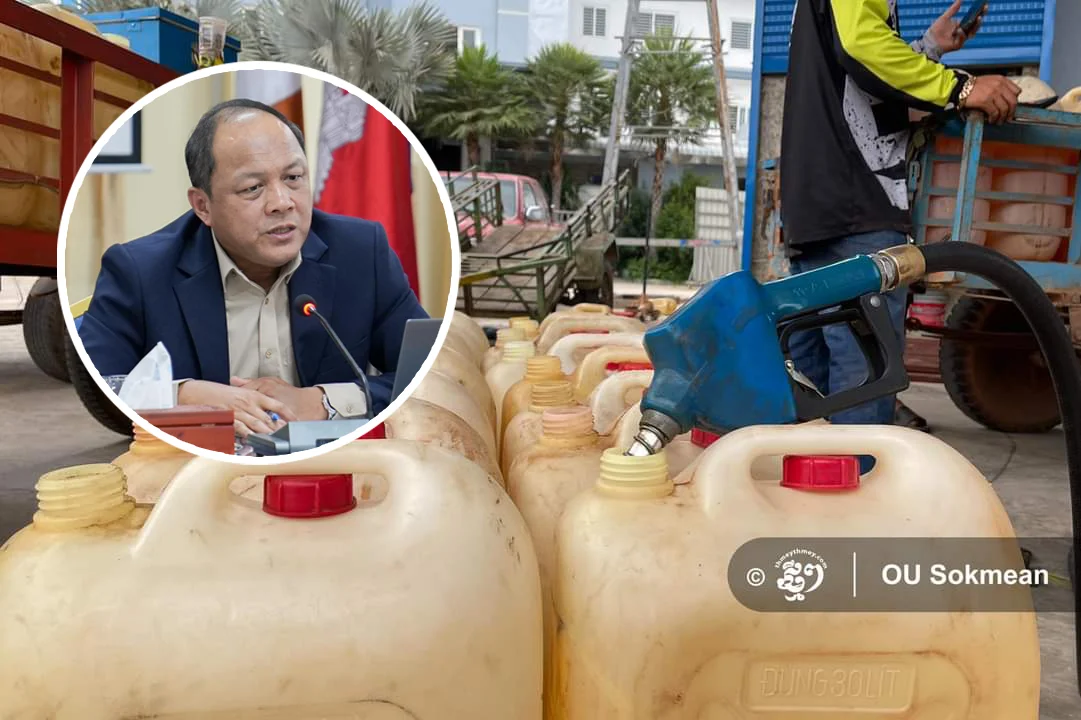
The Consumer Protection, Competition and Fraud Repression Directorate-General (C.C.F.D.) has issued a stern warning to owners of fuel stations and depots across Cambodia. Any establishment found exploiting the current market situation to illegally raise prices for gasoline or diesel, or engaging in non-compliance with consumer regulations, will face administrative measures and financial penalties. This strong admonition from the C.C.F.D. comes in response to observations that some provincial depots have been selling fuel at prices exceeding the limits set by the Ministry of Commerce.
Currently, the retail price for regular gasoline and diesel is capped at 3,850 Riel per liter, a directive all fuel stations and depots are mandated to follow until March 10. However, global fuel prices are experiencing a significant surge, influenced by geopolitical tensions in the Middle East, particularly concerning Iran. This international volatility is inevitably impacting Cambodia, with expectations that the prices for gasoline, diesel, and gas within the country could rise substantially starting early next week.
Addressing the potential surge in fuel prices in Cambodia, Mr. Kim Meas Sok Sreyha, Director-General of the C.C.F.D., emphasized a zero-tolerance stance. He warned that strict measures would be taken against any fuel station or depot owners who attempt to exploit the situation by raising prices beyond the Ministry of Commerce’s regulated limits, or by tampering with the quality and quantity of fuel sold to consumers. On the afternoon of March 6, Mr. Kim Meas Sok Sreyha stated that individuals or station owners found in violation of the Ministry of Commerce’s retail fuel price regulations would face fines ranging from 4 million to 10 million Riel. These are considered interim penalties. However, should the C.C.F.D. discover any fuel station or depot owner adulterating the quality of fuel, the fine could escalate to as much as 20 million Riel.
According to the Director-General, the imposition of these fines falls under the jurisdiction of law enforcement officers. These officials are tasked with assessing the specific transgressions of each fuel station or depot owner, taking into account factors such as the volume of their commercial operations, the broader societal impact of their actions, and the individual economic circumstances of the business owners.
Furthermore, the C.C.F.D. Director-General issued a stark warning that any fuel station or depot owners who persistently violate the Law on Consumer Protection risk having their business registration certificates or licenses suspended, revoked, or entirely cancelled. Beyond these administrative actions, persistent offenders could also face legal prosecution, with cases being referred directly to the courts.
To ensure widespread compliance, Mr. Kim Meas Sok Sreyha previously instructed all C.C.F.D. branch officials, across both the capital and provinces, to conduct thorough inspections of retail fuel prices at various stations and distribution depots. A key aspect of these inspections involves verifying strict adherence to the notifications on retail fuel prices, which are regularly issued by the Ministry of Commerce every ten days.
In connection with these fuel price concerns, Mr. Kim Pros, Head of the C.C.F.D. branch in Battambang province, reported finding several fuel depot owners exploiting the situation by raising prices. This opportunism was particularly observed as residents, especially farmers in remote areas, were actively purchasing fuel for agricultural purposes. According to Mr. Kim Pros, such price hikes occurred partly because some depots had temporarily suspended or ceased sales due to depleted old stock.
The Battambang C.C.F.D. branch chief confirmed, stating, “We identified one or two fuel depots in isolated locations that were taking advantage by increasing fuel prices. However, we immediately intervened, providing guidance to these owners to ensure compliance with the prices stipulated by the Ministry of Commerce and the Law on Consumer Protection.”
As it stands, the market price for regular gasoline and diesel in Cambodia remains at 3,850 Riel per liter. This figure already reflects an increase of 100 Riel per liter compared to late February. The Ministry of Commerce anticipates that fuel prices in Cambodia are likely to experience a significant upward adjustment starting from March 11.
The surge in oil prices in Cambodia mirrors the global market trend, primarily attributed to the impact of geopolitical tensions near Iran on oil transportation through the international waters of the Strait of Hormuz. The Strait of Hormuz is a critically important global shipping lane for oil exports, with approximately 20% of the world’s total oil traffic passing through it. This vital waterway is used by major oil-producing nations such as Saudi Arabia, the United Arab Emirates, Iraq, Kuwait, and Iran, making any disruption in the region a significant factor in global energy costs.