
Phnom Penh, Cambodia — The Cambodian Riel is not merely a medium of exchange; it embodies the very soul and symbolism of national sovereignty, pride, and the independence of Cambodia’s economic policy. In a significant move aimed at further promoting and broadening the circulation of the Riel within the national economy, Cambodia’s banking and financial sectors are set to implement a new policy requiring all staff salaries to be paid in the local currency, commencing in 2026.
Usage of the Riel has been on a noticeable upward trajectory across the national economy, with its circulation currently accounting for approximately 15-20 percent of transactions. This momentum is part of a broader push to expand the Riel’s role. The National Bank of Cambodia (NBC) has affirmed its commitment to continue implementing monetary policies and measures to enhance Riel usage, emphasizing the need for increased cooperation from all relevant stakeholders to ensure an effective de-dollarization process for the Kingdom.
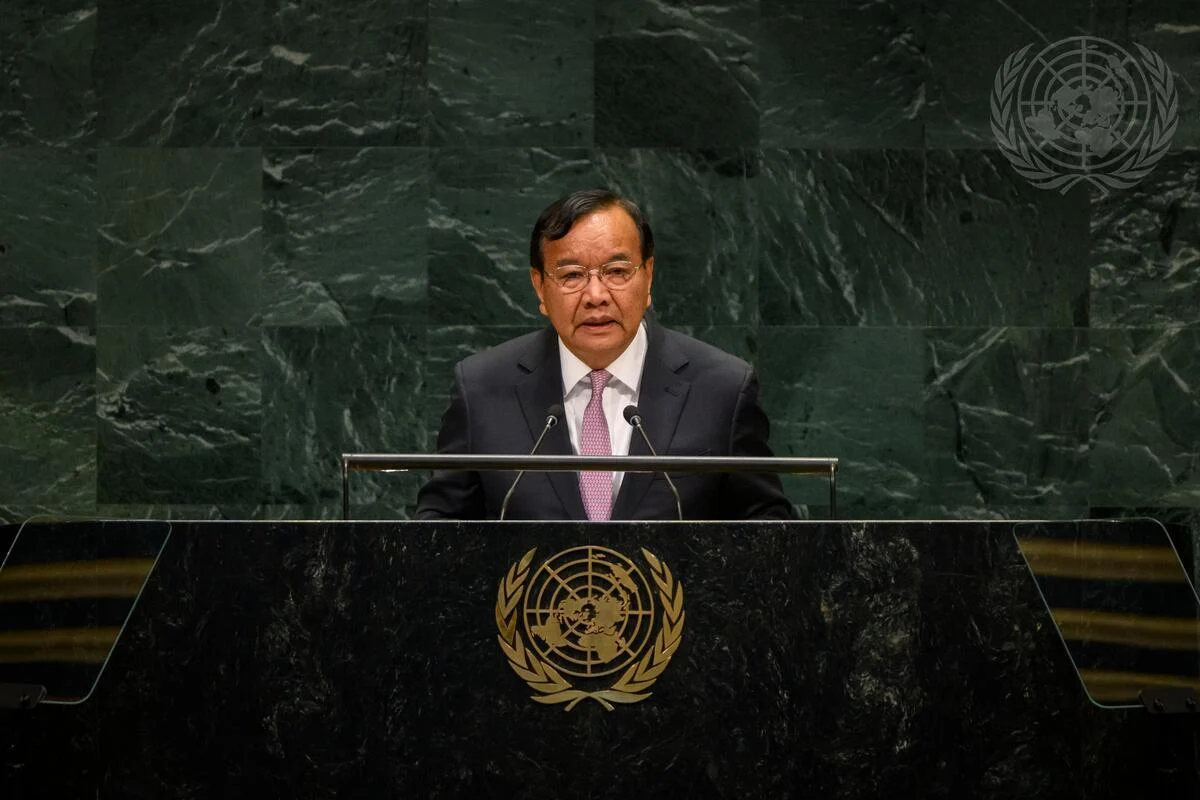
For the year 2026, the National Bank of Cambodia, in collaboration with the Association of Banks in Cambodia (ABC) and the Cambodia Microfinance Association (CMA), will launch a nationwide campaign to encourage and enforce the payment of employee salaries in Riel within these core sectors. This pivotal announcement was made by Mr. Yim Leat, Deputy Governor of the National Bank of Cambodia, during the 46th anniversary of the Riel’s re-circulation, held at the Institute of Banking Technology Studies (IBS) on March 20.
Mr. Yim Leat highlighted that salaries for employees in the banking and financial sectors are currently among the most heavily denominated in US dollars, second only to those in the garment factory sector. “Therefore, 2026 marks the year our banking sector will initiate a campaign to pay employee salaries in Riel, thereby setting an example for other sectors within our economic system,” he stated.
However, Mr. Yim Leat clarified that the campaign to transition employee salaries to Riel within the banking and financial sectors will be implemented gradually, progressing year by year. This phased approach is crucial for building public confidence and maintaining the economic stability of the employees directly affected by this policy within these sectors.
Echoing this commitment, Mr. Rath Sophoan, Chairman of the Association of Banks in Cambodia, expressed the association’s full dedication to participating in the implementation. He confirmed that discussions have already taken place with member banks to ensure that staff salaries across their institutions will be paid in Riel. Mr. Sophoan revealed that the Association of Banks in Cambodia is currently developing a comprehensive three-year roadmap designed to achieve 100 percent Riel-based salary payments, with implementation beginning in 2026.
“This year, we aim to start with at least 25 percent of employee salaries in the banking sector being paid in Khmer currency,” Mr. Rath Sophoan asserted. “By continuing this gradual implementation over three to four years, we are confident that we can achieve our 100 percent target.”
The microfinance sector is also actively considering the push to disburse employee salaries in Riel. Mr. Kaing Tongngy, Spokesperson for the Cambodia Microfinance Association (CMA), confirmed their commitment to the principle. He noted, “Currently, the technical aspects are being evaluated, specifically whether salaries will be paid entirely in Riel or if a certain percentage will remain in Riel and another in US dollars.”
Mr. Kaing Tongngy also emphasized that the mechanisms and campaigns for Riel salary payments in the banking and financial sectors would be implemented gradually, aligning with the approach outlined by other experts. He elaborated, “If our employees primarily need US dollars, paying them entirely in Riel would undoubtedly result in a loss for them. Conversely, if their daily expenses are primarily in Riel and we pay them entirely in dollars, they would also incur a loss. This is a critical point we must consider, and within our sector, we are currently discussing and studying a foundation to promote the use of the Riel effectively.”
As of the end of 2025, the microfinance sector’s credit balance had reached US$6 billion. Of this, 23.29 percent (approximately US$1.4 billion) was disbursed in Riel, serving 1.53 million clients. These figures are based on data from the Cambodia Microfinance Association and the Credit Bureau Cambodia (CBC).
When compared to the broader financial landscape, the total credit balance for the entire banking sector stood at US$62 billion by the end of 2025, with only 13.71 percent of this amount extended in Riel. Specifically for the banking sector, Riel-denominated credit constituted 11.60 percent of its total credit volume. Furthermore, customer deposits in Riel represented 12-13 percent of the total US$98.7 billion in deposits.
By the end of 2025, Cambodia’s financial landscape comprised 59 commercial banks, 4 deposit-taking microfinance institutions, 7 specialized banks, 85 non-deposit microfinance institutions, 12 financial leasing institutions, 89 rural credit institutions, 4 third-party processors, 30 payment service providers, 1 credit information company, 5 foreign representative offices, and 3,395 money changers. This comprehensive overview is based on the National Bank of Cambodia’s annual report for 2025.