
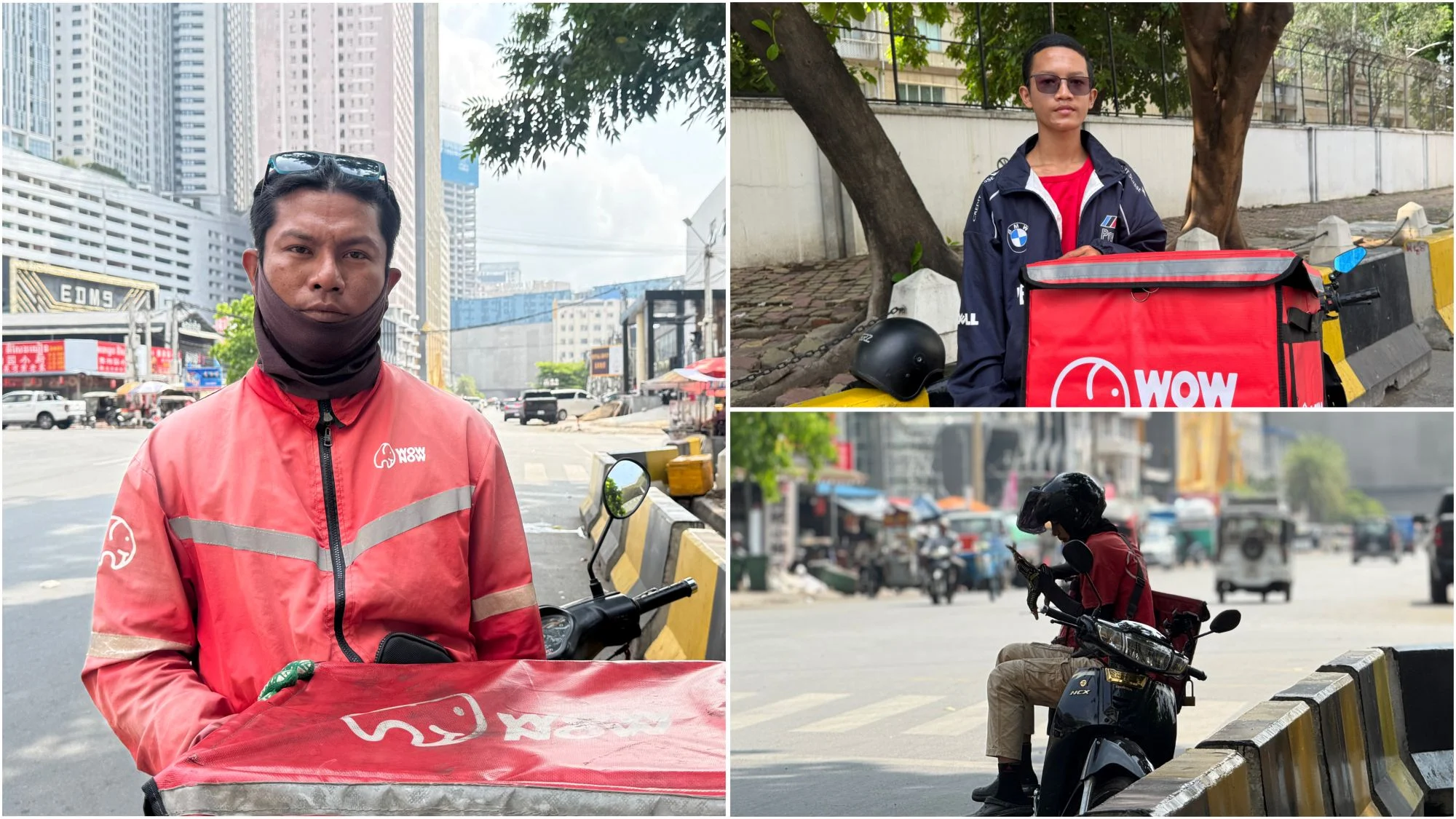
Phnom Penh, Cambodia – Food delivery riders across Phnom Penh are facing severe financial strain, with many reporting a nearly 50% drop in their daily earnings due to the continuous rise in gasoline prices. This significant challenge is exacerbated by the fact that delivery fees, set by app-based companies, have remained unchanged, creating a difficult dilemma for the riders.
The increase in fuel costs directly impacts their operational expenses, yet any attempt to raise delivery charges could lead to a decline in customer demand. Consequently, the rising price of gasoline is profoundly affecting the livelihoods of those who rely on app-based delivery services for their income.
Working in food delivery is becoming increasingly challenging, particularly concerning profitability. Riders typically spend a considerable portion of their daily earnings on fuel to ensure they can continue working throughout the day. Many are deeply concerned about their dwindling daily income, a situation compounded by a noticeable decrease in the number of delivery orders.
Thach Somaly, a 38-year-old food delivery rider for Wownow in Phnom Penh, expressed his profound worry regarding his family’s livelihood amidst the escalating fuel prices. Despite the hardships, he feels compelled to continue working to provide for his family, even when his income is nearly halved. Somaly highlighted the inherent difficulties and risks of the job, especially the potential for unforeseen accidents on the road if one is not vigilant while driving.
He elaborated on the financial pressure: “The rising fuel prices make it incredibly difficult. We spend a lot, but our income is very low. It’s extremely tough. Previously, I could earn between 60,000 to 80,000 Riel per day, but now I struggle to even make 40,000 Riel.” Somaly noted that despite the surge in operational costs, delivery fees have not increased proportionally, leaving him with significantly less disposable income after covering fuel and other expenses. On days with fewer orders, his daily earnings are often insufficient to cover his basic living costs.
Somaly added, “If gasoline prices continue to climb, I might have to temporarily stop this profession because it’s becoming unsustainable to manage the expenses. I sincerely hope that fuel prices will decrease, allowing us to continue our work and adequately support our families.”
Another rider, 17-year-old Phea Soheng, shared a similar plight. He travels extensively across Phnom Penh each day to complete numerous food deliveries, a necessity to earn enough income. However, the high cost of gasoline has dramatically increased his fuel expenditure. To compensate, Soheng feels pressured to accept a higher volume of orders than before, just to cover his operational costs and bring home money for his family.
Soheng further explained that the delivery profession is fraught with challenges beyond just fuel prices. He regularly contends with heavy traffic congestion, fierce competition from other riders, and extreme weather conditions like intense heat or heavy rain, all of which make his job significantly harder. Despite these adversities, Soheng perseveres, as he has no other viable income-generating options. He dedicates himself to working tirelessly every day to support his family’s living expenses.
“Fuel is so expensive, it’s really hard because my motorbike consumes a lot,” Soheng stated. “I spend approximately 20,000 Riel on gasoline daily. Earning money is tough now, and there aren’t many food orders because people simply have less money to spend.”
Both riders share a common hope that fuel prices will eventually stabilize or decrease, thereby alleviating their financial burdens and making their profession more sustainable. They also collectively appeal to relevant institutions and authorities to acknowledge their struggles and implement measures to support food delivery riders, who are currently grappling with these escalating operational costs.