Cambodia is actively pursuing a robust global trade agenda, highlighted by the recent completion of a comprehensive feasibility study for a bilateral Free Trade Agreement (FTA) with Switzerland. This significant step marks a pivotal moment in Cambodia’s efforts to diversify its trade partnerships and enhance economic growth.
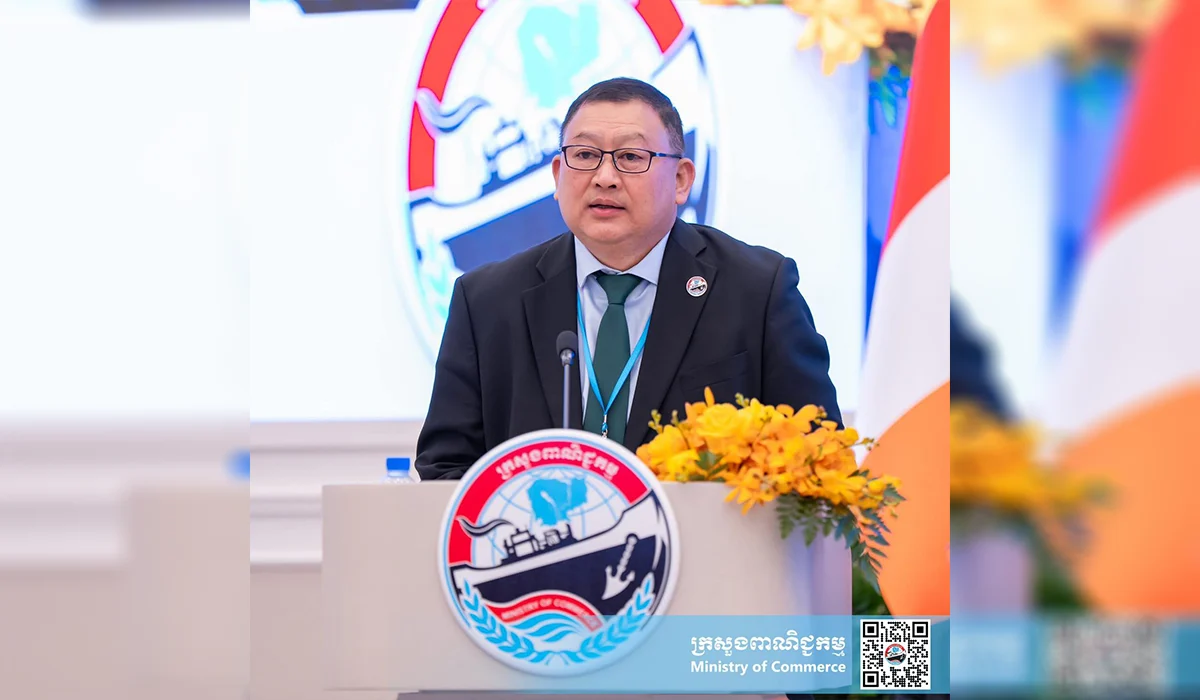
In parallel, the Kingdom is also committed to strengthening multifaceted cooperation with the Republic of Turkey across various sectors. These initiatives were recently underscored by the Ministry of Commerce, detailing Cambodia’s ambitious plans for international trade and economic engagement.
The thorough feasibility study for the Cambodia-Switzerland FTA has now been entirely concluded, paving the way for potential negotiations. This agreement is seen as a crucial opportunity to expand market access for Cambodian products and foster deeper economic ties with a key European economy.
Regarding the Republic of Turkey, the Ministry of Commerce has been instrumental in organizing the fourth meeting of the Cambodia-Turkey Joint Economic Commission. This high-level dialogue aims to intensify bilateral cooperation across a broad spectrum of areas, including trade, services, investment, agriculture, forestry, fisheries, and civil aviation. Officials emphasized Turkey’s strategic significance, highlighting its role as a vital gateway for Cambodian goods to access markets in both the African continent and the neighboring Middle Eastern region.
Beyond these primary engagements, Cambodia is also advancing its relationships with other major trading partners. With the United Kingdom, the Ministry of Commerce is actively pursuing a Memorandum of Understanding (MoU) on Trade and Investment Day. This MoU is anticipated to be a strong catalyst for promoting bilateral cooperation and enabling Cambodia to fully leverage the benefits offered by the UK’s Developing Countries Trading Scheme (DCTS).
Officials anticipate that the DCTS will provide substantial advantages for Cambodia, particularly ensuring continued preferential market access to the UK even after the nation graduates from its Least Developed Country (LDC) status. This strategic engagement aims to safeguard Cambodia’s competitive edge in the British market.
Similarly, with the European Union, Cambodia has been engaged in constructive dialogues, implementing and exchanging perspectives on additional rules of origin for its prominent bicycle industry, as well as discussing the EU’s broader preferential trade system. Discussions have also encompassed Cambodia’s investment climate, market access opportunities, and various technical assistance initiatives from the EU, all vital for maintaining robust trade relations and market pathways to the European bloc.
Looking towards new horizons, Cambodia is also exploring the establishment of a Memorandum of Understanding (MoU) with South Africa on trade and economic cooperation. This potential agreement aims to significantly boost the exchange of goods and facilitate the organization of business forums and trade exhibitions between the private sectors of both nations, opening up new avenues for commerce on the African continent.
These proactive efforts build upon Cambodia’s existing network of Free Trade Agreements, which include established pacts with China, South Korea, and the United Arab Emirates. Furthermore, Cambodia is an active participant in regional frameworks such as the Regional Comprehensive Economic Partnership (RCEP) and various ASEAN agreements, including the ASEAN Trade in Goods Agreement, with several new agreements successfully concluded in 2025.
A cornerstone of Cambodia’s trade policy involves the diligent and strict implementation of rules of origin for all its trade agreements. This commitment is crucial for ensuring that Cambodian products consistently qualify for preferential market access under various schemes, including those offered by the European Union, unilateral preferential systems from other developed nations, and within both bilateral and multilateral free trade frameworks.
Within the ASEAN framework, Cambodia has successfully completed the ratification procedures for three key agreements and protocols. These include the ASEAN Food Safety Regulatory Framework, a protocol to amend the ASEAN Agreement on the Movement of Natural Persons, the First Protocol to Amend the ASEAN-Hong Kong, China Free Trade Agreement, and the Second Protocol to Amend the Agreement Establishing the ASEAN-Australia-New Zealand Free Trade Area. Additionally, Cambodia has finalized negotiations to upgrade several other existing agreements.
On the global stage, under the World Trade Organization (WTO) framework, Cambodia successfully underwent its trade policy review in 2025, covering the period from 2017 to 2024. This review reaffirmed the country’s commitment to transparent and rules-based international trade.
These comprehensive trade initiatives have contributed to significant economic performance. In 2025, Cambodia’s total trade volume reached an impressive $65.20 billion, marking a substantial increase of 17.66% compared to the previous period. Exports accounted for $31.28 billion, growing by 16.95%, while imports stood at $33.96 billion, showing an 18.32% increase, underscoring the Kingdom’s dynamic engagement in global commerce.