The Cambodian Riel is increasingly trusted and utilized in the daily lives of citizens, particularly in rural areas. This national currency now plays a primary and widespread role in income generation, expenditure, and savings activities across the country.
In Kampong Chhnang province, specifically, an impressive average of 88 percent of residents’ daily expenses are now conducted using the Riel. This significant figure underscores the growing confidence in Cambodia’s national currency.
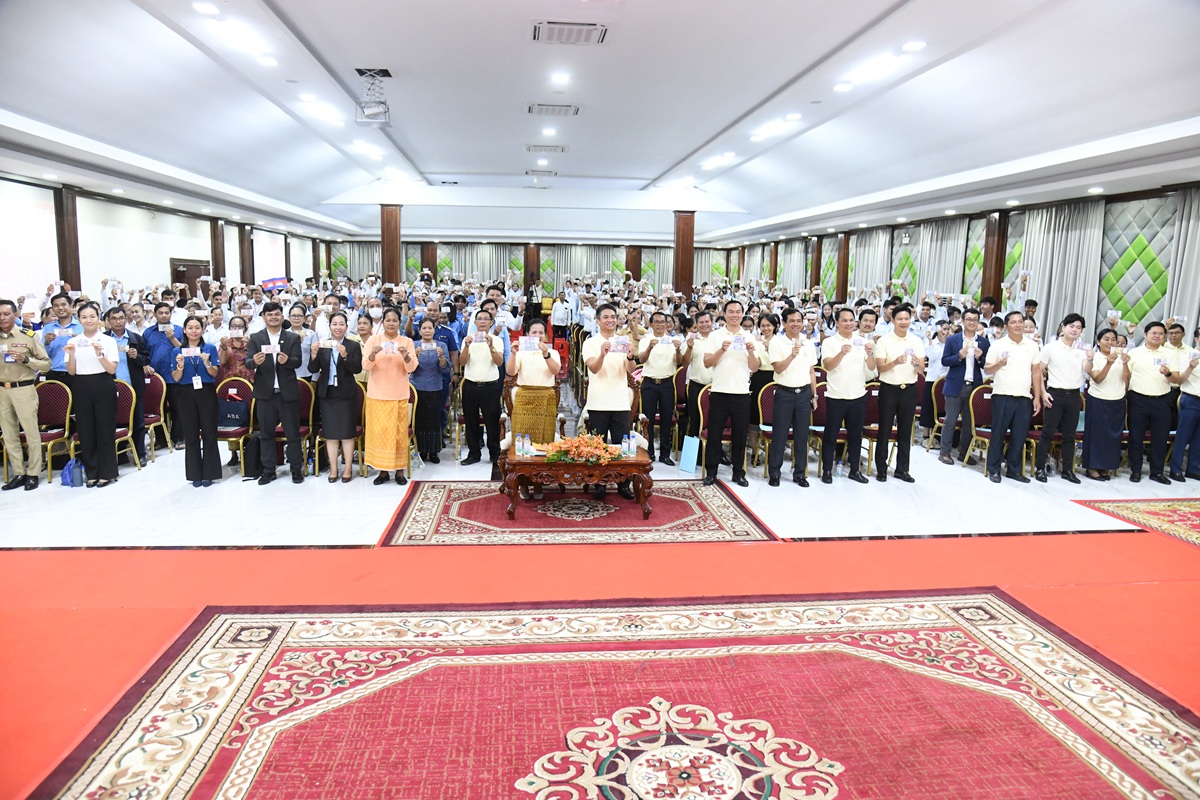
The National Bank of Cambodia (NBC) continues its dedicated campaign to promote the Riel, coinciding with the 45th anniversary of its re-circulation. This promotional drive, which took place in Kampong Chhnang on November 24, also highlights modern financial systems such as Bakong and HRQR for enhanced digital transactions.
According to Mr. Yim Leat, Deputy Governor of the National Bank of Cambodia, the history of the Riel reflects the nation’s journey. After gaining independence from France in November 1953, the National Bank of Cambodia was established in December 1954. The Riel was first issued and put into general circulation across the country in September 1955 during the Sangkum Reastr Niyum era. However, Cambodia’s descent into civil war in the early 1970s gradually eroded confidence in the Riel. Between 1975 and 1979, the genocidal Pol Pot regime abolished the circulation of the Riel entirely and destroyed all economic and social achievements, marking a ‘year zero’ for Cambodia and completely annihilating trust in the national currency.
Following the liberation on January 7, 1979, the government embarked on arduous efforts to rebuild the economy and society. The Riel was officially re-circulated on March 20, 1980, to facilitate the exchange of goods and services, a move that was widely welcomed by the populace.
Despite these efforts, the weakness of the national economy throughout the 1980s and the prolonged civil war rendered confidence in the Riel extremely fragile. The early 1990s saw Cambodia prepare for its first general elections under the United Nations Transitional Authority in Cambodia (UNTAC). During this period, UNTAC spent a substantial amount of approximately 1.7 billion US dollars for its operations and daily expenses, which initiated the widespread dollarization of the Cambodian economy. Mr. Yim Leat noted that Cambodian citizens began to accept and use the US dollar in their daily lives alongside the Riel from that point onward, leading to the deep-rooted habit of thinking in US dollars, especially when the Cambodian economy was in recovery and the Riel’s value was unstable.
Nonetheless, efforts to enhance the circulation of the Riel have consistently been pursued with the goal of strengthening Cambodia’s economy. Both the Royal Government and the National Bank of Cambodia have implemented numerous policies to this effect, with Riel promotion being a key priority, particularly since the early 2000s, coinciding with improved macroeconomic stability following Cambodia’s full peace in late 1998. As a result, the trend of Riel usage has steadily increased.
Joint research by the National Bank of Cambodia and the Japan International Cooperation Agency (JICA) in 2017 revealed that the Riel had gained significant trust and was increasingly used in people’s daily lives, especially in rural areas where it plays a primary and extensive role in income, expenditure, and savings. The data specifically highlighted Kampong Chhnang province, where approximately 88 percent of daily expenditures were made in Riel.
“I highly appreciate the contribution of all residents in Kampong Chhnang province for actively participating in promoting the use of the Riel,” stated the Deputy Governor of the National Bank of Cambodia.
Further research conducted by the National Bank of Cambodia in collaboration with the UNDP in 2023 indicated that factory workers residing in provinces spend up to 92 percent of their total daily expenses in Riel, particularly for accommodation, utilities, transportation, food, clothing, and medicine. Factory workers living in urban centers spend up to 82 percent of their total expenses in Riel. Mr. Yim Leat emphasized that if both sellers and buyers use only the Riel, transactions would become quicker, easier, and eliminate the need to calculate exchange rates.
The Riel has maintained remarkable stability over the past two decades, averaging approximately 4,050 Riel per US dollar. This stability has helped to prevent further increases in dollarization, despite the continued high usage of the US dollar in Phnom Penh and other provincial urban centers compared to the Riel. Mr. Yim Leat underscored that this historical lesson demonstrates how quickly trust in the Riel can be lost, and how challenging and time-consuming it is to restore it, requiring active participation from ministries, institutions, the private sector, and especially all citizens.
In line with these efforts, the National Bank of Cambodia and the Ministry of Education, Youth, and Sport have issued a joint directive on “Promoting the Use of Riel for Payment Services in Educational Institutions.” This initiative aims to encourage the pricing of tuition fees and other services in the education sector exclusively in Riel. The directive stipulates that all public and private educational institutions should explore opening Riel bank accounts, pay salaries to all education personnel in Riel, and most importantly, display all tuition fees and service charges solely in Riel.
Educational institutions are required to present tuition fees in Riel as the primary price, without any additional surcharges. If students, parents, or guardians choose to pay in foreign currency or US dollars, the institutions will apply the official exchange rate. This comprehensive approach calls for widespread cooperation and participation from ministries, institutions, factories, companies, enterprises, banking and financial institutions, and the general public. It encourages broader Riel usage through payments, savings, salary disbursements, pricing, displaying goods and service values in Riel, promoting the Riel as the primary currency for accounting records, and monitoring its progress across various sectors. Additionally, the Deputy Governor appealed for greater preferential treatment for those using the national currency, requesting that no extra fees or service charges be applied to Riel transactions.