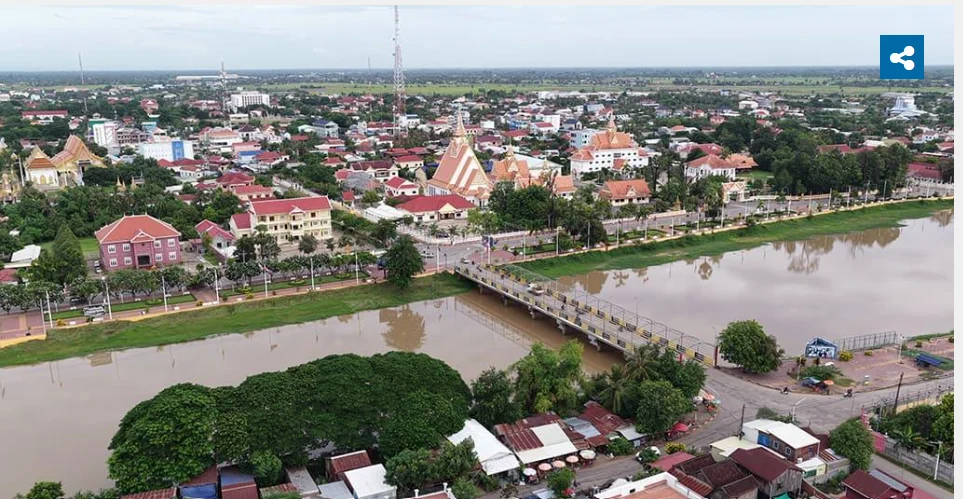
Phnom Penh, Cambodia – On December 1st, the Asian Development Bank (ADB) officially approved a substantial investment program totaling $763 million for Cambodia. This significant financing package aims to enhance access to clean water supply and sanitation, strengthen water security across the nation, and significantly boost the resilience and livability of communities situated along the Mekong River, Tonle Sap Lake, and the coastal regions.
Out of the total $763 million approved by the ADB to support Cambodia’s development initiatives, a critical component includes a $20 million grant from the Asian Development Fund (ADF). This grant is specifically allocated to expanding access to clean water and sanitation services, reinforcing water security, and promoting urban resilience and livability within Cambodian cities.
According to the ADB, this investment program, titled the “Liveable, Resilient, and Water-Secure Cities” initiative, will be disbursed through a multi-phased financing approach. Its primary objective is to upgrade and expand water services in fourteen cities and twelve districts across the vital Mekong River, Tonle Sap Lake, and coastal areas. A key focus of the program is inclusive coverage, with approximately 15% of the total direct beneficiaries anticipated to be from low-income households, ensuring that the most vulnerable communities receive essential services.
Ms. Yasmin Siddiqi, the ADB Country Director for Cambodia, emphasized the transformative potential of this investment. She stated that the program would be instrumental in helping Cambodia develop climate-resilient and inclusive urban services. This approach will not only support greater livability but also enhance productivity and competitiveness across the targeted regions. “By improving water supply, sanitation, and other crucial urban services, we aim to deliver direct benefits to over 2 million citizens, ensuring that even the most vulnerable communities are not left behind,” Ms. Siddiqi highlighted.
Despite Cambodia’s remarkable progress in recent years, with access to basic water supply and sanitation services reaching nearly 83% in 2024 – a substantial increase from 73% for water and 54% for sanitation in 2015 – several key challenges persist. Services such as sewerage systems, storm drainage, and solid waste management still require significant upgrades to meet growing demand and effectively address the increasingly extreme weather patterns linked to climate change.
More than half of Cambodia’s population faces a high risk of flooding. Without effective adaptation measures, such as robust storm drainage systems, annual climate-induced losses could escalate to $10.6 billion by 2050, potentially reducing the nation’s Gross Domestic Product by up to 10%. Urban areas are particularly vulnerable, with the urban population projected to grow by approximately 47.8%, from 4.6 million in 2024 to 6.8 million by 2040 (representing 35% of the total population).
The ADB’s investment program aligns seamlessly with the Royal Government of Cambodia’s goals of fostering urban resilience, alleviating poverty, and achieving sustainable development objectives. It will support both short-term and long-term priority investments designed to expand and sustain resilient urban infrastructure and services, enhance water security, and strengthen institutional capacities for service delivery.
The investment program adopts a phased implementation methodology, which allows for responsiveness to the operational capacities of the executing and implementing agencies. This approach ensures flexibility, efficient management, and the integration of lessons learned from previous experiences, thereby strengthening the program’s overall execution by relevant institutions. Each successive phase will build upon the preceding one, guaranteeing the quality of outcomes and the long-term sustainability of the entire program.